

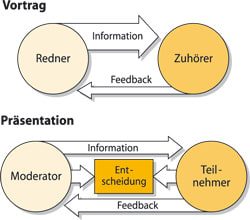
Presenting effectively is more than just sharing information; it’s about connecting with your audience, conveying your message clearly, and achieving your objectives. The question of “Welche Präsentationstechnik brauche ich?” (Which presentation technique do I need?) is fundamental, as the best approach isn’t one-size-fits-all. It depends heavily on your context, audience, and desired outcome. Selecting the appropriate Präsentationstechnik can significantly impact how your message is received, remembered, and acted upon.
Overview
- Selecting the right Präsentationstechnik is critical for effective communication.
- Your audience and presentation objective are the primary factors in choosing your method.
- Modern Präsentationstechnik spans traditional tools like whiteboards to digital platforms and virtual reality.
- Mastering delivery, including vocal tone, body language, and storytelling, is as important as the content.
- Adaptability is key; different scenarios demand different Präsentationstechnik approaches.
- Engaging the audience through interaction or visual aids improves message retention.
- Careful planning and rehearsal are integral to successful application of any Präsentationstechnik.
Understanding Your Audience and Objective: The Foundation of Präsentationstechnik Choice
Before even thinking about slides or visuals, the most critical step in selecting your Präsentationstechnik is to understand who you’re speaking to and what you aim to accomplish. Are you presenting to industry experts who appreciate deep technical detail, or a general public audience needing simpler explanations? Is your goal to inform, persuade, educate, or entertain? The answers to these questions will dictate everything from your content’s complexity and tone to the specific Präsentationstechnik you employ. For instance, a technical demonstration for engineers will require a different set of visual aids and a more data-driven narrative than a motivational speech for new employees. Consider their prior knowledge, their expectations, and how they prefer to receive information. A highly visual audience might respond well to infographics and video clips, while a group of executives might prefer concise data summaries and actionable insights. Aligning your Präsentationstechnik with these foundational elements ensures your message hits the mark.
Traditional vs. Digital: Choosing Your Präsentationstechnik Medium
The choice of medium is another pivotal aspect of Präsentationstechnik. Traditional methods like whiteboards, flip charts, and physical props offer spontaneity and direct interaction, suitable for smaller groups, brainstorming sessions, or workshops where immediate collaboration is valued. The act of writing or drawing in real-time can foster a sense of shared creation. On the other hand, digital tools—ranging from slideshow software like PowerPoint or Keynote to advanced virtual presentation platforms—provide capabilities for rich multimedia integration, sophisticated animations, and seamless information delivery to large or geographically dispersed audiences. When presenting to a client in the US or colleagues across continents, virtual Präsentationstechnik platforms become indispensable, allowing for screen sharing, polls, and even virtual whiteboards. The key is to select a medium that best supports your content and audience interaction strategy, not simply to use the flashiest technology available. Sometimes a simple, well-structured handout can be a powerful Präsentationstechnik on its own, offering a tangible reference point for your audience.
Mastering Delivery: Voice, Body Language, and Interactive Präsentationstechnik
Even with the most compelling content and the perfect medium, effective delivery is what truly brings a presentation to life. Your voice, for example, is a powerful tool within your Präsentationstechnik arsenal. Varying your tone, pace, and volume can maintain audience engagement and emphasize key points. Monotony, conversely, can quickly lead to disinterest. Similarly, body language—including posture, gestures, and eye contact—communicates confidence and openness. Establishing eye contact with various members of your audience, for instance, creates a personal connection and signals that you are speaking directly to them. Storytelling is another powerful Präsentationstechnik for delivery, making complex information relatable and memorable by weaving facts into a narrative structure. Furthermore, incorporating interactive elements such as asking questions, conducting live polls, or facilitating short group discussions actively involves the audience, moving them from passive listeners to active participants. This active engagement can significantly improve comprehension and retention of your message, turning a lecture into a dialogue.
Adapting Präsentationstechnik for Different Scenarios: From Meetings to Conferences
The setting and purpose of your presentation profoundly influence the optimal Präsentationstechnik. A casual team meeting, for example, might benefit from a more conversational style, perhaps using a simple whiteboard or a shared digital document to facilitate discussion rather than a formal slide deck. Here, the emphasis is on collaboration and idea generation. In contrast, a formal business presentation to stakeholders demands a polished, structured approach with clear objectives, well-designed visuals, and a confident, persuasive delivery. For a large conference, where you might have limited time and a diverse audience, your Präsentationstechnik needs to be highly impactful and concise, often relying on strong visual storytelling and a dynamic stage presence. Educational workshops, on the other hand, frequently benefit from hands-on activities, practical demonstrations, and opportunities for participants to practice new skills. The ability to flexibly adapt your Präsentationstechnik based on these varying scenarios is a hallmark of a skilled communicator, ensuring that each presentation is tailored for maximum effectiveness.
