

Key Takeaways
- Small changes to irrigation, drainage, storage, and landscaping can reduce conditions that pests use.
- Standing water and outdoor leaks should be checked regularly, especially after rain or irrigation problems.
- Clear, inspectable space around walls, doors, and patios reduces the number of hiding places for pests.
- Trimmed plants, secure waste containers, and sealed gaps help reduce outdoor-to-indoor pest movement.
- Persistent activity, structural damage, and signs of nesting may require a professional inspection.
Pest prevention in Phoenix, Arizona, often begins outside. A dry-looking yard can still contain the small sources of water, shelter, food, and access that support mosquitoes, ants, roaches, rodents, scorpions, and spiders. Irrigation, block walls, shaded patios, desert landscaping, and storage areas all deserve occasional attention.
For recurring concerns, pest control in Phoenix may involve more than treating what is visible indoors. Green Mango Pest Control provides residential and commercial pest services across Greater Phoenix and the Valley, including help with common local issues such as scorpions, rodents, termites, mosquitoes, ants, and roaches. Their local service focus makes professional inspection useful when simple yard corrections do not stop the activity.
Why Yard Conditions Matter in Phoenix
Outdoor pest pressure can build before pests are noticed inside. In Phoenix neighborhoods, drip irrigation, decorative containers, patio furniture, dense shrubs, and gaps around garages can create protected areas close to the house. The goal is not a bare yard. It is a yard that drains well, stays easier to inspect, and does not give pests an easy path indoors.
Start by looking for a few common conditions: water reaching the foundation, wood or cardboard stored against walls, plants touching windows or rooflines, open trash containers, and clutter left in shaded corners.
Remove Standing Water
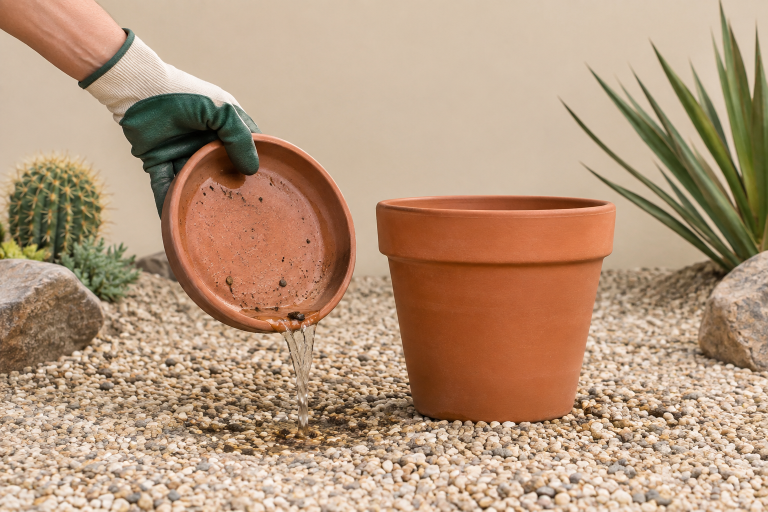
Even a small amount of water can matter. Mosquitoes breed in standing water, so containers and low-lying areas should be part of regular yard care. The Maricopa County backyard checklist recommends draining water from items such as flowerpots, tires, wheelbarrows, birdbaths, pool covers, and outdoor containers.
Outdoor Areas to Check
- Plant saucers, decorative pots, buckets, and watering cans
- Children’s toys, pet bowls, and unused wading pools
- Tarps, wheelbarrows, pool covers, and outdoor equipment
- Blocked gutters, drains, and low spots after rain or watering
Once a week, walk the yard, empty collected water, and scrub containers that must remain outside. After monsoon rain, repeat the check before water remains in hidden corners.
Check Irrigation and Outdoor Leaks
Water belongs in the root zone, not along a wall, patio, or garage threshold. Broken emitters, cracked tubing, dripping hose bibs, and sprinklers aimed at hard surfaces can create damp areas that last longer than intended.
Quick Irrigation Check
- Run each irrigation zone briefly, watching for any spray or pooling.
- Look for cracked tubing, loose connections, and saturated soil.
- Check whether water reaches walls, foundations, patios, or doors.
- Adjust emitters and repair leaks, then inspect again after watering ends.
This is especially useful around shaded side yards, where slow leaks can go unnoticed. Regular equipment checks also prevent water waste.
Reduce Outdoor Shelter and Clutter
During the Phoenix heat, protected hiding places are valuable to many pests. Stacks of pots beside a shaded block wall may look harmless, but they can conceal webs, insects, or rodent activity, making routine inspection harder.
- Keep firewood elevated and away from exterior walls.
- Remove cardboard promptly or store it in sealed containers.
- Clear leaf litter, branches, and unused materials from corners.
- Organize garages, sheds, and patio storage so the floor and walls remain visible.
- Move stored items away from garage walls when practical.
Manage Plants Near the Home
Landscaping can add shade and curb appeal without becoming a pest bridge. Trim branches that contact the roof, walls, or windows. Keep shrubs open enough for airflow and visibility, remove dead plant material, and keep vines from covering window frames or roof edges.
Watch for persistent ant trails around plants, particularly where honeydew-producing insects may be present. Better spacing and visibility make it easier to spot a problem early without removing every plant near the home.
Secure Trash, Compost, and Pet Food
Food residue and organic waste can attract insects and rodents. Phoenix heat can intensify odors from spilled trash, fallen fruit, pet food, and compost, so cleanup is most effective when it is routine rather than occasional.
- Keep trash lids closed and rinse bins when spills develop.
- Bring pet food inside after feeding time.
- Store birdseed and animal feed in sealed containers.
- Keep compost covered and avoid leaving wet food scraps exposed.
- Pick up fallen fruit from patios and beneath trees.
Seal Common Pest Entry Points
Yard maintenance reduces pressure outside, but pests can still enter through small openings. Inspect gaps beneath garage doors, loose weather stripping, damaged screens, cracks around utility pipes, openings near vents, and gaps around sheds or storage rooms.
Use the appropriate material for the opening, such as caulk for narrow cracks, door sweeps for thresholds, and durable mesh for vents. Larger damage or hard-to-reach areas may need repair by a qualified professional.
Create a Simple Weekly Yard Routine
A 10 to 15-minute weekly check can catch changing conditions before they become a larger issue:
- Walk the perimeter of the house.
- Empty or cover water-holding containers.
- Check irrigation lines, faucets, drains, and pool-cover areas.
- Move clutter away from walls, doors, and the edges of the garage.
- Look for droppings, mud tubes, new webs, chewed material, or ant trails.
- Check screens, door sweeps, and visible cracks.
- Secure trash, pet food, and stored seed.
Take a photo of recurring activity. A simple record can help show whether the issue is associated with a specific irrigation zone, weather event, or side of the property.
When to Call a Pest Professional
Cleanup is an important first step, but it cannot always remove an established colony, nest, infestation, or pest problem inside a structure. Consider an inspection when activity continues after yard changes or when the issue involves potential safety or property concerns.
- Repeated sightings inside living areas
- Fresh droppings, nesting material, or rodent sounds in walls or ceilings
- Visible termite tubes or suspected wood damage
- Large numbers of stinging insects near doors or play areas
- Scorpions or spiders appearing repeatedly indoors
Common Questions
How often should a Phoenix yard be checked for pest risks?
Check weekly, then add an extra walk-through after heavy rain, irrigation repairs, high winds, or major landscaping work.
Can yard cleanup stop an existing infestation?
It can remove food, moisture, and shelter that support activity, but it may not eliminate pests already nesting indoors, within walls, or under landscaping.
What should homeowners do after a monsoon storm?
Inspect gutters, drains, pool covers, containers, low spots, and irrigation lines. The City of Phoenix’s outdoor leak guidance can also help homeowners recognize outdoor water issues that need attention.
Final Thoughts
Small, repeatable yard habits can make a Phoenix property less inviting to pests. Drain water, repair leaks, reduce clutter, manage plants, secure waste, and seal openings around the home. When activity keeps returning, or signs point to rodents, termites, hidden nesting, or potentially dangerous pests, an inspection can identify the source and help determine the next practical step.
