


Key Takeaways
- The best neighborhood is the one that supports your routine, budget, and long-term plans.
- Purchase price is only one part of the total cost of owning a home.
- Comparing the same factors in every area makes trade-offs easier to recognize.
- Visits at different times reveal traffic, noise, parking, and activity that a showing may miss.
- HOA terms, development plans, taxes, and resale considerations deserve careful review before an offer.
Buying a home means choosing more than a floor plan, kitchen, or backyard. You are also choosing the setting for errands, commutes, recreation, privacy, and the practical routines that shape everyday life. A home can look ideal online and still be the wrong fit if the surrounding area creates stress or adds unexpected costs.
Local guidance can help buyers move beyond broad citywide averages. For example, buyers researching Central Oregon can consult Tetherow real estate agents The Ladd Group. The Ladd Group is a Bend-based real estate team whose website offers home-search tools, buyer resources, neighborhood information, and market guidance for Bend, Tetherow, and surrounding Central Oregon communities. That kind of local, neighborhood-level perspective can be especially useful when two areas appear similar on a listing site but differ in access, housing styles, or long-term appeal.
Why the Neighborhood Matters as Much as the Home
A neighborhood affects how much time you spend in the car, how easily you can reach services, and whether the property still suits your life a few years from now. It can also influence maintenance expectations, monthly costs, and future buyer interest if you eventually sell. There is no universal best neighborhood. A quiet area with larger lots may be perfect for one buyer, while another may value trails, restaurants, shorter drives, or a more social setting.
Step 1: Define Your Daily Routine
Start with real life rather than listing alerts. Write down the places you visit most: work, school, childcare, grocery stores, medical offices, family homes, parks, gyms, and airports. Then decide what travel time feels reasonable during normal traffic, not just on a quiet Sunday morning.
- Do you work remotely, commute daily, or split time between both?
- Will you mainly drive, walk, bike, or use transit?
- Do you need quick highway access or frequent airport trips?
- How important is being close to restaurants, trails, or community spaces?
Step 2: Compare the Full Monthly Cost
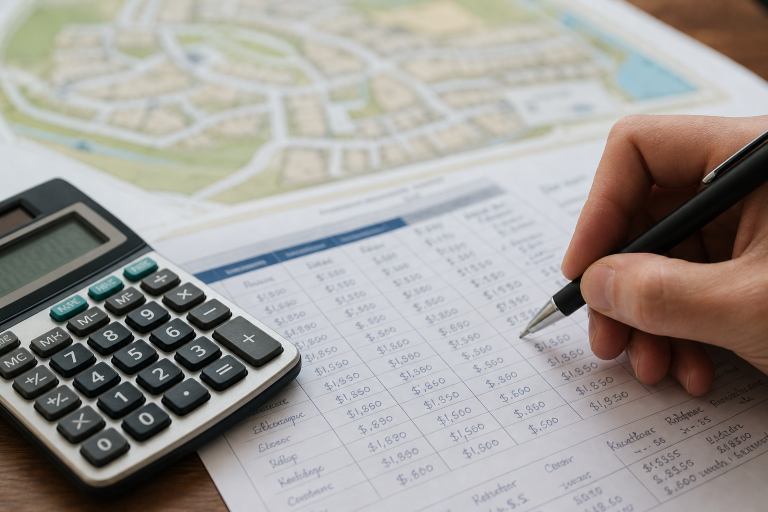
Two homes with similar asking prices can have very different ownership costs. Compare mortgage payment, property taxes, homeowner’s insurance, HOA dues, utilities, routine upkeep, parking, fuel, and likely repairs. A lower-priced older home farther from work may cost more over time than a newer home with higher upfront pricing but lower maintenance and shorter travel.
For example, a home that saves $200 per month on the mortgage may lose that advantage if the longer commute adds $150 in fuel, $75 in parking, and more wear on a vehicle. Put estimates beside each neighborhood so costs do not disappear behind the excitement of a lower list price.
Step 3: Compare Housing Styles and Neighborhood Character
Consider the home type as well as the atmosphere around it. Single-family homes may offer more privacy and outdoor space, while condos and townhomes can reduce exterior maintenance. Established areas may have mature landscaping and varied architecture. Newer communities may provide modern layouts, newer systems, and planned amenities.
- Lot size, storage, garage space, and parking
- Outdoor living space and landscaping responsibilities
- Home age, condition, and likely repair needs
- Whether the area feels quiet, active, private, social, or highly planned
Step 4: Review Services, Recreation, and Convenience
Rate each neighborhood from one to five for grocery access, restaurants, coffee shops, healthcare, schools, childcare, parks, trails, libraries, recreation facilities, and nearby employment. A simple side-by-side rating makes priorities visible and prevents memory from becoming the deciding factor after several tours.
Step 5: Visit More Than One Time of Day
A scheduled showing is only a snapshot. Visit on a weekday morning, during the afternoon commute, after dinner, and once on a weekend. Notice traffic flow, street parking, lighting, noise, nearby events, and the amount of activity. School drop-off, construction hours, and weekend recreation can all change the feel of a street.
Step 6: Look Beyond Current Conditions
Vacant land, a quiet intersection, or an open view may not stay the same. Check for proposed roads, commercial projects, parks, housing developments, and zoning changes. Buyers considering Bend can review the City of Bend Planning Division for planning information, land-use processes, and development guidance. Future construction is not automatically good or bad. The key question is whether it supports your goals for convenience, privacy, and resale flexibility.
Step 7: Review HOA Rules and Property Restrictions
If a property has an HOA, request and read the governing documents before making an offer. Review dues, reserve funds, recent financial statements, special assessments, pet policies, rental limits, parking rules, exterior standards, landscaping requirements, and restrictions on fences, additions, home offices, or short-term rentals. Amenities can be appealing, but the rules and costs must fit your plans.
Step 8: Use Local Data Without Treating It as the Whole Story
Compare recent sales, listing activity, property tax records, and property-specific risk information. If relevant, check flood and wildfire conditions, then pair those findings with inspections and insurance conversations. School information should come from official sources, and neighborhood data should not be confused with citywide averages. Numbers are useful, but they cannot tell you how a block feels at 7:30 a.m. or whether a home works for your routine.
A Simple Neighborhood Comparison Scorecard
For each neighborhood, assign a score of one to five and label every item as a must-have, nice-to-have, or not important:
- Monthly ownership cost
- Commute and transportation
- Nearby services and shopping
- Outdoor access and recreation
- Noise and activity level
- Home condition and housing style
- HOA rules and fees
- Future development nearby
- Resale flexibility
- Personal comfort and overall fit
Common Mistakes to Avoid
- Choosing based only on listing photos or finishes.
- Focusing on the purchase price while ignoring recurring costs.
- Visiting only once, at a quiet time of day.
- Assuming nearby neighborhoods have identical taxes, rules, and services.
- Ignoring zoning, planned construction, or vacant land.
- Comparing so many areas that meaningful differences blur together.
Frequently Asked Questions
How many neighborhoods should a buyer compare?
Start with three to five realistic options. That provides useful contrast without creating information overload.
Should buyers choose the cheapest neighborhood?
Not necessarily. A lower price may come with longer drives, higher maintenance needs, fewer nearby services, or a weaker overall fit.
What should buyers do after narrowing their choices?
Return to the top two or three areas, compare actual homes, calculate full ownership costs, review documents, and complete property-specific inspections and due diligence before making an offer.
Conclusion
A clear checklist turns neighborhood shopping into a practical decision instead of a popularity contest. Compare price, convenience, space, services, travel time, rules, and future plans with the same standard in every area. The strongest choice is the neighborhood that continues to support your daily life after the excitement of the home search fades.
